Oregon


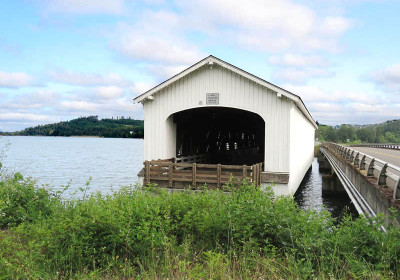


Images and history of Oregon's Covered Bridges
Oregon’s Covered Bridge building dates back to the 1850s, and well into the 20th century, long after these wooden structures were relics elsewhere. By 1925, there were approximately 450 covered bridges along Oregon’s highways and country roads, and the state’s highway department supplied covered bridge designs to local agencies until the 1950s. Currently, there are slightly more than 50 accessible covered bridges, 45 of which are historic truss-type bridges.
Covered bridges have a rich history of Sunday picnics, foot-stomping community dances, and horse-drawn wagons rattling across wooden plank floors. It is no surprise that Covered Bridges figure into countless tales of pioneer life. They were often at the heart of a community, providing shelter for political rallies as well. Before the advent of the automobile, the inside walls of many covered bridges were plastered with notices, messages, political flyers, and circus posters, all protected from the rain and handy for travelers passing through the bridge. Today, new vehicular bridges are generally built to replace those existing older covered bridges, thus sadly ending a grand and historic era.
Powerful floods, heavy traffic loads, vandalism, and neglect have led to the demise of hundreds of these historic bridges. As vehicles and logging trucks got bigger, covered bridges had to be built with wider and higher portals. Gradually, the cost of constructing new wooden bridges exceeded the price of concrete and steel.
Oregon's Bridges photographed in May of 2025.